
How to Clean a Toothbrush: 7 Dentist-Backed Tips
Rinse it well, let it air dry, keep it separate from other brushes, and replace it before worn bristles stop cleaning effectively. Here is the simple routine—and the sanitizing shortcuts you can skip.
Medically reviewed by Dr. Reich and Dr. Laing, General Dentists · Garden City Family Dentistry · Educational information, not a diagnosis or a substitute for individualized dental care.
What is the best way to clean a toothbrush?
For routine toothbrush hygiene, simple steps are usually the most useful.
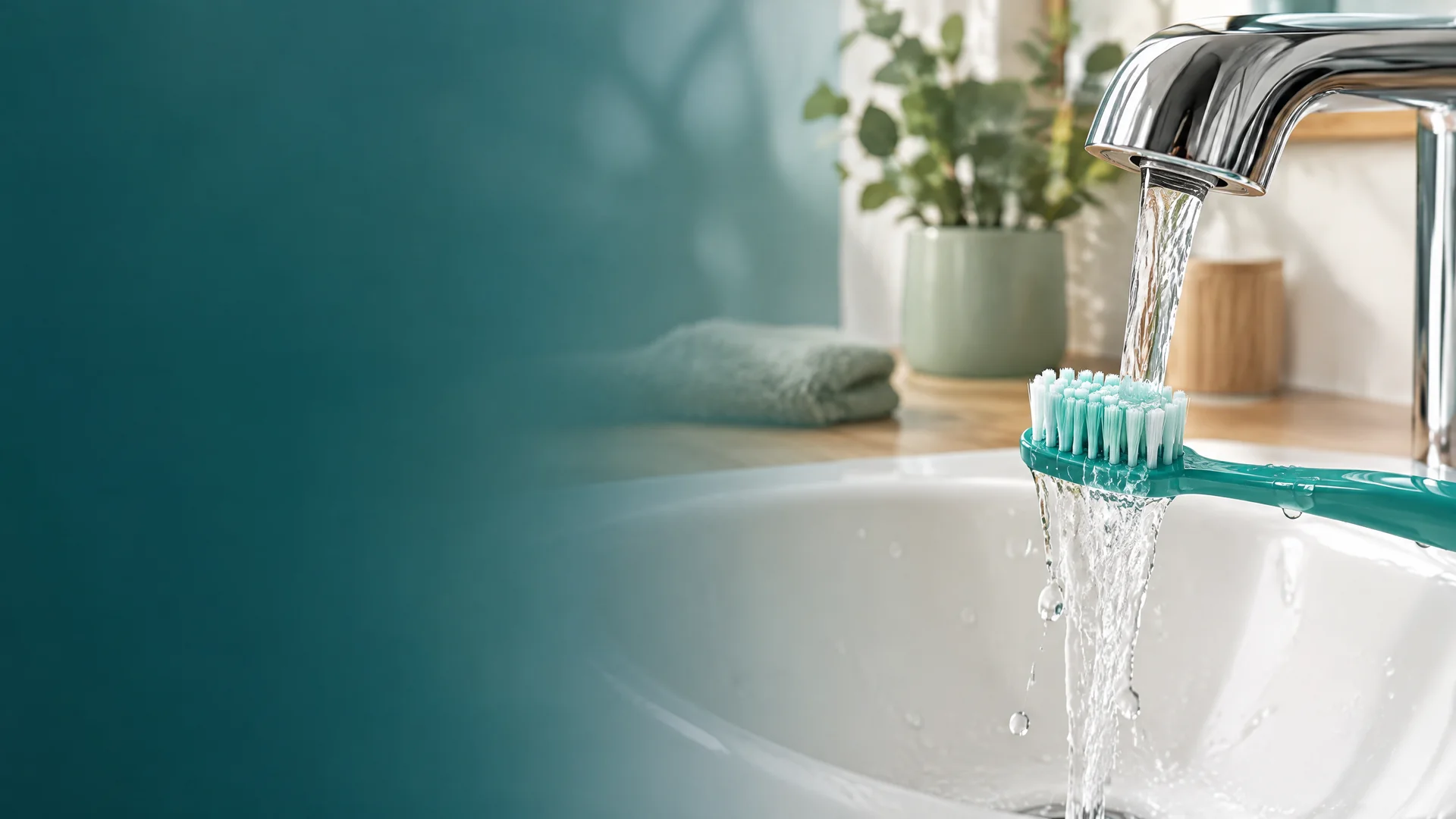
After brushing, rinse the toothbrush thoroughly under clean running water, shake off excess water, and store it upright in the open air so it can dry.
Do not share toothbrushes. Avoid sealing a wet brush in a closed container, and replace it about every three to four months—or sooner when the bristles are visibly frayed or matted. Daily disinfection is not necessary for most people.[1]
- Rinse away toothpaste and debris
- Store upright and uncovered
- Allow the bristles to air dry
- Keep brush heads from touching
- Never share a toothbrush
- Replace worn bristles promptly
Clean your toothbrush without trying to make it sterile.
Toothbrushes can collect microorganisms from the mouth, hands, bathroom environment, and storage container. That can sound alarming, but it needs context: the American Dental Association (ADA) says there is no evidence that bacteria found on toothbrushes cause adverse health effects. The goal is a brush that is rinsed, dry, in good condition, and used by one person—not a brush that is promised to be “germ-free.”[1]
What matters most?
Moisture and closed storage can help microorganisms remain on a toothbrush. A review of the research found higher bacterial counts with closed containers than with open-air storage, although studies of toothbrush contamination and sanitizing methods remain limited.[2]
Rinse the bristles after every use.
Hold the brush head under clean running water until visible toothpaste and debris are gone. Run a clean thumb gently across the bristles if material remains, then rinse your hands. A forceful spray or special solution is not required for ordinary cleaning.
After rinsing, shake off excess water. Do not wipe the bristles on a shared towel, which may reintroduce material from another surface.
Store the toothbrush upright and let it air dry.
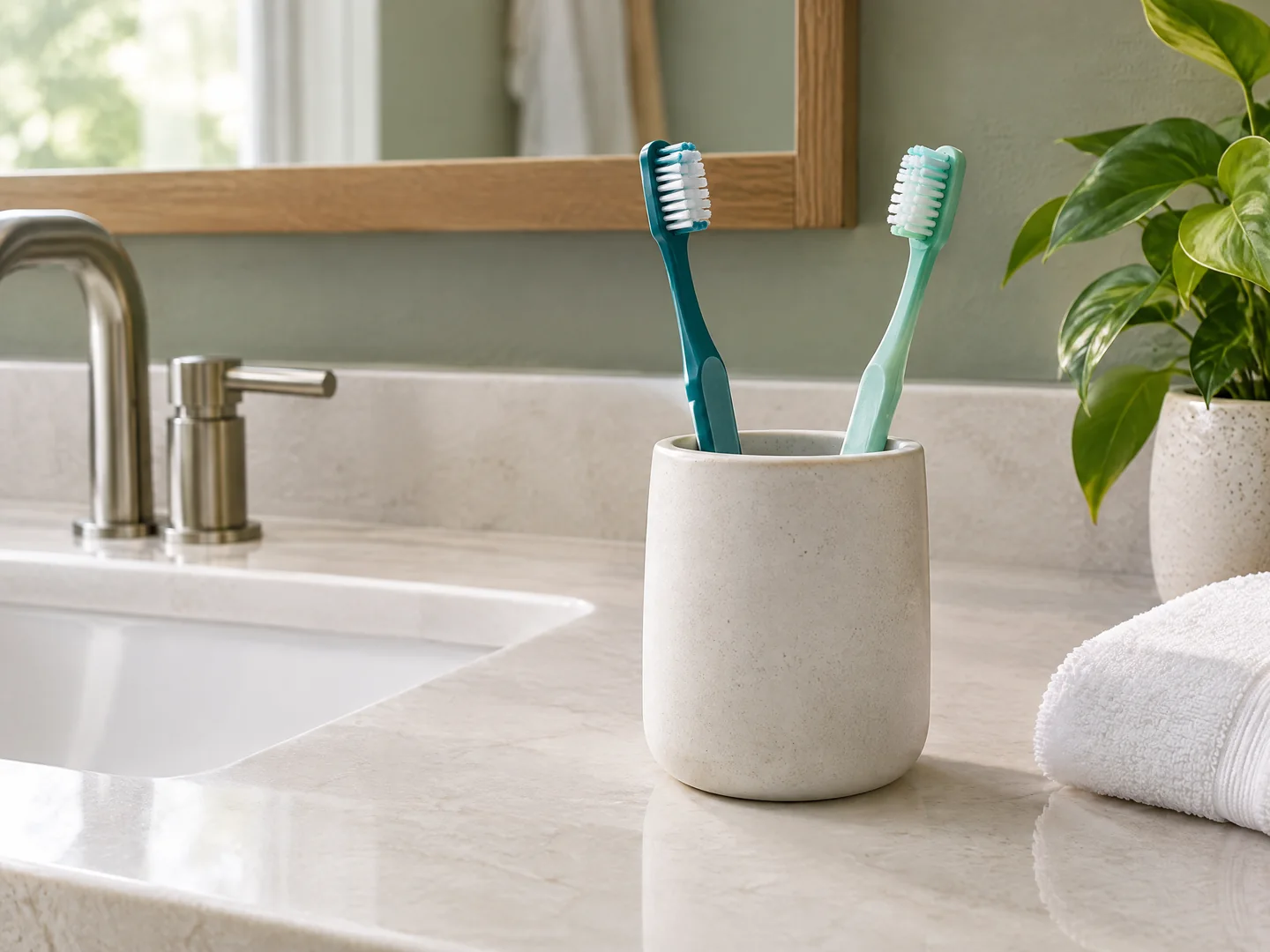
Place the handle in a stable holder so water can drain away from the bristles. Keep the head exposed to circulating air between uses. You do not need to rotate several toothbrushes or place a brush in direct sunlight; open-air drying is the practical step supported by current guidance.
Never share a toothbrush, and keep brush heads apart.
Sharing a toothbrush can exchange saliva, other bodily fluids, and microorganisms. Give every household member a separate brush. If several brushes use the same holder, leave enough room so the heads do not touch. Labeling handles can help children and guests avoid mix-ups.
If another person uses your toothbrush by mistake, replace it rather than trying to disinfect it for continued use.
Do not seal a wet toothbrush in a closed container.
A closed cap or container can hold moisture around the bristles and promote more microbial growth than open-air storage. A ventilated travel cover can protect the head in a bag, but let the brush dry before packing it whenever possible. Remove it from the case and allow it to finish drying when you arrive.
Replace the toothbrush every three to four months.
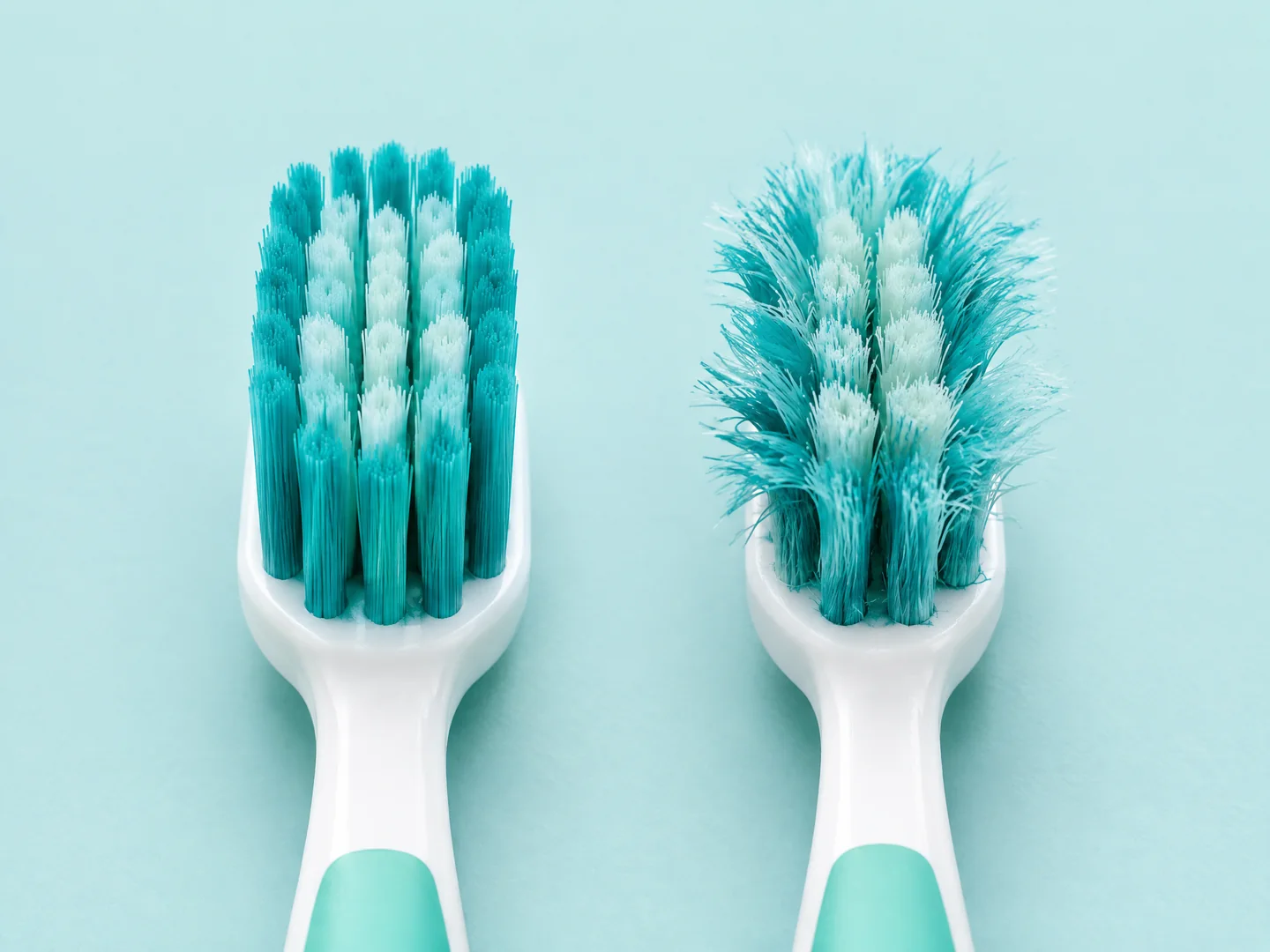
The ADA recommends replacing a manual toothbrush or powered brush head approximately every three to four months. Replace it sooner if the bristles look matted, bent, or frayed. Worn bristles clean less effectively and may signal that you are brushing with too much pressure.
A phone reminder, calendar event, or new brush at the start of each season can make replacement easier to remember.
Treat disinfecting as optional—not essential.
The ADA notes limited research showing that certain soaking methods can reduce the number of bacteria on a toothbrush. A lower bacterial count is not the same as sterilization, and routine soaking has not been shown to provide a health benefit for most people. Thorough rinsing, open-air drying, not sharing, and timely replacement remain the core steps.
If a clinician recommends a sanitizer because of your medical needs, follow those individualized instructions. For a commercial toothbrush sanitizer, the ADA advises choosing a device cleared by the U.S. Food and Drug Administration and using it exactly as directed.[1]
Never microwave or dishwasher-clean a toothbrush.
High heat can damage the handle and bristles. Do not microwave, boil, or put the brush in a dishwasher. Avoid household cleaning chemicals that are not intended for oral-care products. If a brush seems damaged, contaminated, or difficult to clean, replacing it is the safer and simpler option.
How often should you replace your toothbrush?
Plan on a new toothbrush or electric brush head every three to four months. The calendar is only one signal. Replace it sooner if the bristles lose their shape because worn bristles do not clean as effectively.
- Bristles spread outward instead of standing straight
- Tips look matted, flattened, or uneven
- The head is cracked or otherwise damaged
- Someone else accidentally used the brush
- Your dentist or physician gave you different instructions
If a brush becomes frayed quickly, ask your dental team to check your brushing pressure and technique. A soft-bristled brush and gentle pressure are usually recommended.
A clean brush works best as part of complete preventive care.
Toothbrush care supports your routine, but it cannot replace effective brushing or professional evaluation. The ADA recommends brushing twice daily for two minutes with fluoride toothpaste and a soft-bristled toothbrush.[1]
Brush twice daily
Use gentle pressure and reach the outer, inner, and chewing surfaces.
Brush long enough
Two minutes gives the brush time to clean each area of the mouth.
Choose soft bristles
Soft bristles can clean effectively while reducing the risk of gum abrasion.
Clean between teeth
Floss or use an interdental tool for areas a toothbrush cannot reach.
A cleaner toothbrush cannot remove tartar or treat gum disease.
Daily brushing helps disrupt plaque, but hardened tartar must be removed professionally. A professional dental cleaning and exam can address buildup that home care cannot fully remove and help you improve your brushing routine.
Talk with a dental professional if you notice changes that continue despite regular brushing and flossing:
- Bleeding, red, or swollen gums
- Persistent bad breath or unpleasant taste
- Tooth or gum pain
- Loose teeth or receding gums
These symptoms do not prove that you need a specific procedure, but they deserve an evaluation. Learn how scaling and root planing differs from a routine cleaning, or explore the practice’s broader preventive dentistry services.
More answers about toothbrush hygiene
How do you clean a toothbrush after brushing?
Rinse the bristles thoroughly under clean running water to remove toothpaste and debris. Shake off excess water, store the brush upright, and let it air dry without a closed cap.
How often should you replace your toothbrush?
Replace a toothbrush or electric brush head about every three to four months, or sooner if the bristles are visibly matted, frayed, or worn.
Do you need to disinfect your toothbrush every day?
Most people do not need a daily disinfecting routine. Thorough rinsing, upright open-air drying, not sharing, and timely replacement are the core toothbrush-care steps.
Can you put a toothbrush in the dishwasher or microwave?
No. The ADA advises against microwaving or dishwashing a toothbrush because high heat may damage it.
Can bacteria on a toothbrush make you sick?
Toothbrushes can harbor bacteria, but the ADA states that there is no evidence these bacteria cause adverse health effects. Sensible care still helps keep the brush clean and effective.
Should you replace your toothbrush after being sick?
Routine replacement after every minor illness is not included in the ADA’s core toothbrush-care guidance. Replace the brush if it is worn, if someone else used it, or if a dental or medical professional gives you specific advice for your situation.
Evidence behind this guide
- American Dental Association: Toothbrushes. Guidance on rinsing, upright open-air storage, not sharing, replacement, sanitizing evidence, and heat-related damage. Updated August 2026.
- Frazelle MR, Munro CL. Toothbrush Contamination: A Review of the Literature. Nursing Research and Practice. 2012;2012:420630.
Editorial note: This article replaces older terminology and updates the original 2021 post to reflect current, qualified toothbrush-care guidance. It is educational and does not establish a diagnosis or treatment plan. Individual recommendations may differ for people with specific medical, dental, or immune-related needs.
Need help making your home-care routine work better?
Bring your questions to a preventive visit. Our team can look at your teeth and gums, discuss your technique and tools, and recommend a routine that fits your needs.
7110 Venoy Road, Garden City, MI 48135 · Serving Garden City, Westland, Dearborn Heights, Livonia, Canton, and Metro Detroit.