

Prevent pain and infection
Remove a problematic tooth that is causing or likely to cause recurring symptoms.

Evaluate and remove problematic third molars with a plan for imaging, comfort, extraction, closure, and recovery.
Medically reviewed by Dr. Reich and Dr. Laing · Garden City Family Dentistry · Last updated September 16, 2026 · Educational purposes only.
Wisdom tooth removal is a procedure to extract third molars at the back of the mouth. Removal may be recommended when teeth are impacted, misaligned, difficult to clean, painful, repeatedly infected, or creating risk for nearby teeth and gums. An evaluation and dental imaging help determine whether removal is appropriate.
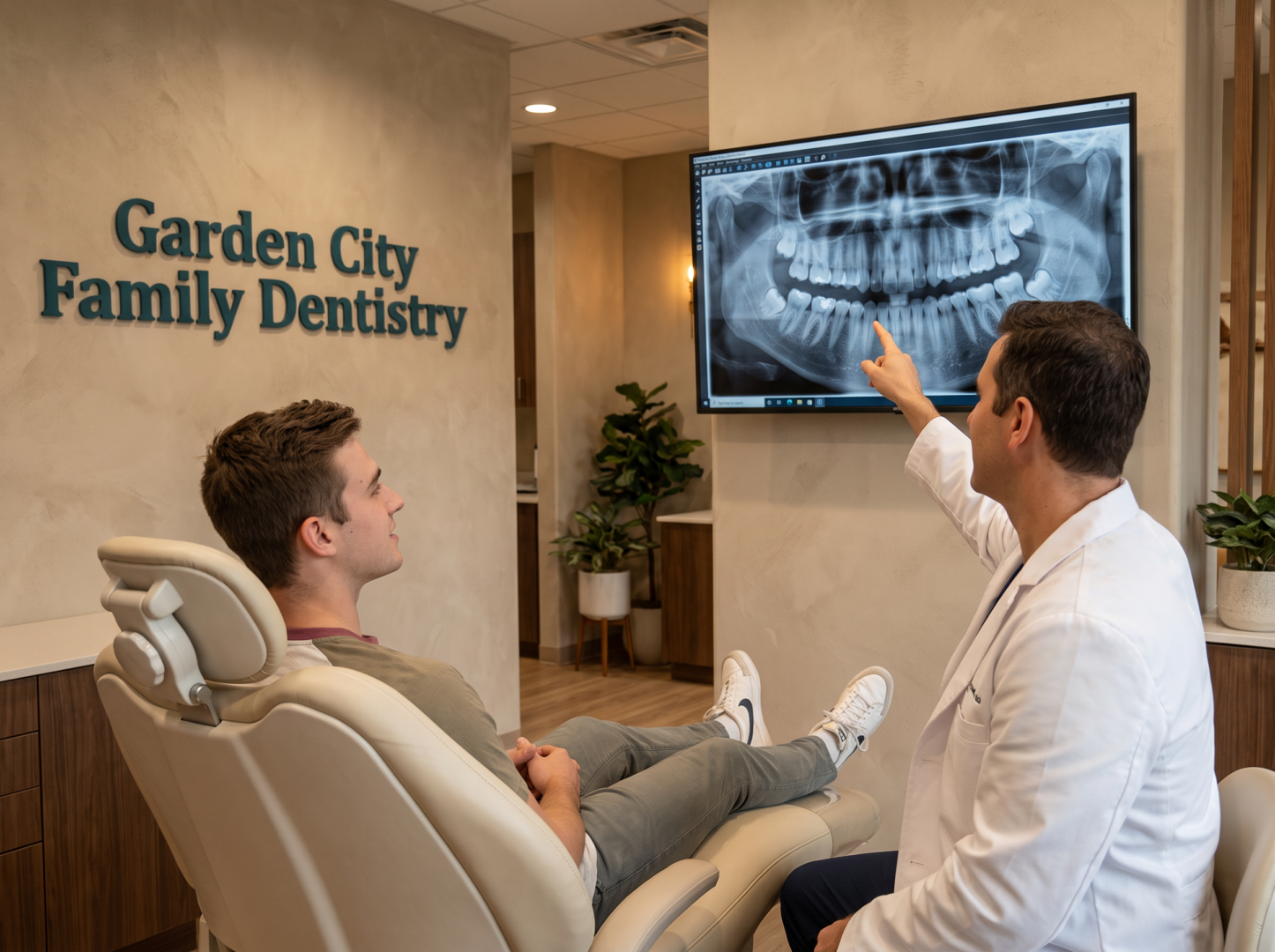
Wisdom teeth can become trapped below the gums, grow at an angle, or create a space that is difficult to keep clean. Garden City Family Dentistry evaluates position, roots, surrounding structures, symptoms, and overall oral health before discussing removal and comfort options.
Plan Your VisitThe right timing and approach depend on the tooth position, your symptoms, your health history, and the complexity of the extraction.
Remove a problematic tooth that is causing or likely to cause recurring symptoms.
Address areas that are difficult to brush and floss around the wisdom tooth.
Reduce the chance that an impacted or angled tooth damages the tooth in front of it.
Use imaging and a clear recovery plan to understand the next steps.
The right approach depends on your oral health, symptoms, risk factors, goals, and the findings of your evaluation.

Remove a problematic tooth that is causing or likely to cause recurring symptoms.

Address areas that are difficult to brush and floss around the wisdom tooth.

Reduce the chance that an impacted or angled tooth damages the tooth in front of it.
An evaluation may be recommended for impacted or misaligned wisdom teeth, pain, swelling, recurring infection, orthodontic concerns, or increased decay and gum-disease risk because the teeth are difficult to clean. Late teenage evaluation can help monitor development and timing.
Your dental team will explain findings, alternatives, and recommended timing before treatment.
Not every wisdom tooth must be removed. Evaluation considers position, symptoms, cleanability, roots, surrounding structures, and future risk.
| Option or step | What it means | What to understand |
|---|---|---|
| Monitor | A tooth is positioned well, symptom-free, and easy to clean. | Regular exams and imaging may be recommended. |
| Restore | A tooth has a treatable problem and can be predictably maintained. | The location and access may make long-term care difficult. |
| Remove | The tooth is impacted, symptomatic, infected, damaging nearby teeth, or hard to clean. | Surgical complexity, anesthesia, healing, and aftercare are reviewed. |
| Urgent evaluation | Pain, swelling, fever, drainage, or difficulty opening the mouth occurs. | Call the office promptly for guidance; severe swelling or breathing difficulty requires emergency care. |
Imaging and a personalized comfort plan help the team understand the tooth position and prepare for a controlled procedure.
Evaluate tooth position, roots, bone, and nearby structures before treatment.
Discuss local anesthesia and appropriate oral or IV sedation options when indicated.
Remove the tooth carefully; an impacted tooth may require a small incision.
Review pain management, food, activity, cleaning, and follow-up instructions.
Review symptoms, health history, oral exam, and dental imaging.
Use local anesthesia and discuss appropriate sedation options.
Remove the tooth; an impacted tooth may require a small incision.
Clean the area and use dissolvable sutures when necessary.
Follow recovery, food, activity, medication, and healing guidance.
Most patients return to normal activities within a few days, while swelling and tenderness improve as healing progresses. Follow the office’s specific instructions and call with concerns about worsening pain, swelling, bleeding, fever, or healing.

Choose foods and drinks recommended for the early recovery period.
Avoid habits and activities your provider says could disrupt healing.
Follow the prescribed or recommended pain-management instructions.
Use the cleaning method and timing provided by the dental team.
Allow time for recovery before returning to strenuous activity.
Contact the office if symptoms worsen or healing does not progress.

Costs vary according to the service, imaging, complexity, materials, and follow-up needs. Garden City Family Dentistry offers financing options for qualified patients.
Ask for a clear estimate and confirm current insurance benefits and payment terms before treatment begins.
Explore Insurance and FinancingLocal anesthesia and appropriate sedation options are used to support comfort. Patients may feel pressure, but should not feel sharp pain during the procedure.
Many patients recover within about five to seven days, with normal activities often resuming after two or three days depending on the case.
Sometimes. It depends on extraction complexity and impaction; dissolvable stitches may be used when needed.
Early removal may reduce risk of pain, infection, decay in adjacent teeth, and crowding when the tooth is problematic.
No. Teeth that are fully erupted, correctly positioned, symptom-free, and easy to clean may be monitored.
Garden City Family Dentistry is located at 7110 Venoy Road, Garden City, MI 48135 and welcomes patients from nearby communities.
Explore related services and resources before your wisdom tooth removal appointment.
Keep preventive exams and imaging current.
Explore professional dental cleaning & exam →Add oral cancer screening to preventive care.
Explore oral cancer screenings →Explore routine prevention and patient education.
Explore preventive dentistry →Call today or request an appointment in Garden City, MI.
Find us here
We are delighted to welcome you to our practice and look forward to helping you achieve a healthy, confident smile. Fill out the form below and our staff will contact you promptly.