

Direct answer: The most helpful toothbrushing routine is simple: use a soft-bristled brush and fluoride toothpaste, brush gently for about two minutes twice a day, clean between your teeth daily, and replace a worn brush. Avoid scrubbing, skipping the gumline, brushing only the teeth you can see, or treating a toothbrush as a substitute for professional care. These habits help remove plaque, but they cannot diagnose or treat a dental problem.
If it has been a while since your last preventive dental visit, a professional dental cleaning and exam in Garden City can remove hardened tartar that brushing cannot. This guide also covers children, older adults, and urgent symptoms.
Mistake 1: Brushing too briefly or only once a day
A quick pass over the front teeth may feel better than nothing, but it can leave plaque along the gumline, behind the lower front teeth, and on chewing surfaces. The American Dental Association (ADA) recommends brushing twice a day with a soft-bristled brush; a two-minute routine makes it easier to cover the whole mouth [1].
The fix
Divide your mouth into four sections and spend roughly 30 seconds on each. Use a timer if helpful; two minutes is a target, not a reason to press harder. Ask a dental professional to demonstrate if you are unsure whether you reach every area.
Mistake 2: Using too much pressure
Hard scrubbing does not make teeth cleaner. It can irritate gum tissue and contribute to toothbrush abrasion, especially when combined with a stiff brush or an aggressive back-and-forth motion. Gum bleeding, sensitivity, or recession can have several possible causes; a blog post cannot determine which cause applies to you.
The fix
Hold the brush with your fingertips rather than a tight fist. Use small, gentle motions and let the bristles do the cleaning. Place the bristles toward the gumline at about a 45-degree angle, then move them back and forth in short, tooth-wide strokes [1] [3]. If you consistently see frayed bristles after a short time, ask about pressure and technique at your next dental cleaning and exam.
Mistake 3: Choosing hard bristles or keeping a worn brush
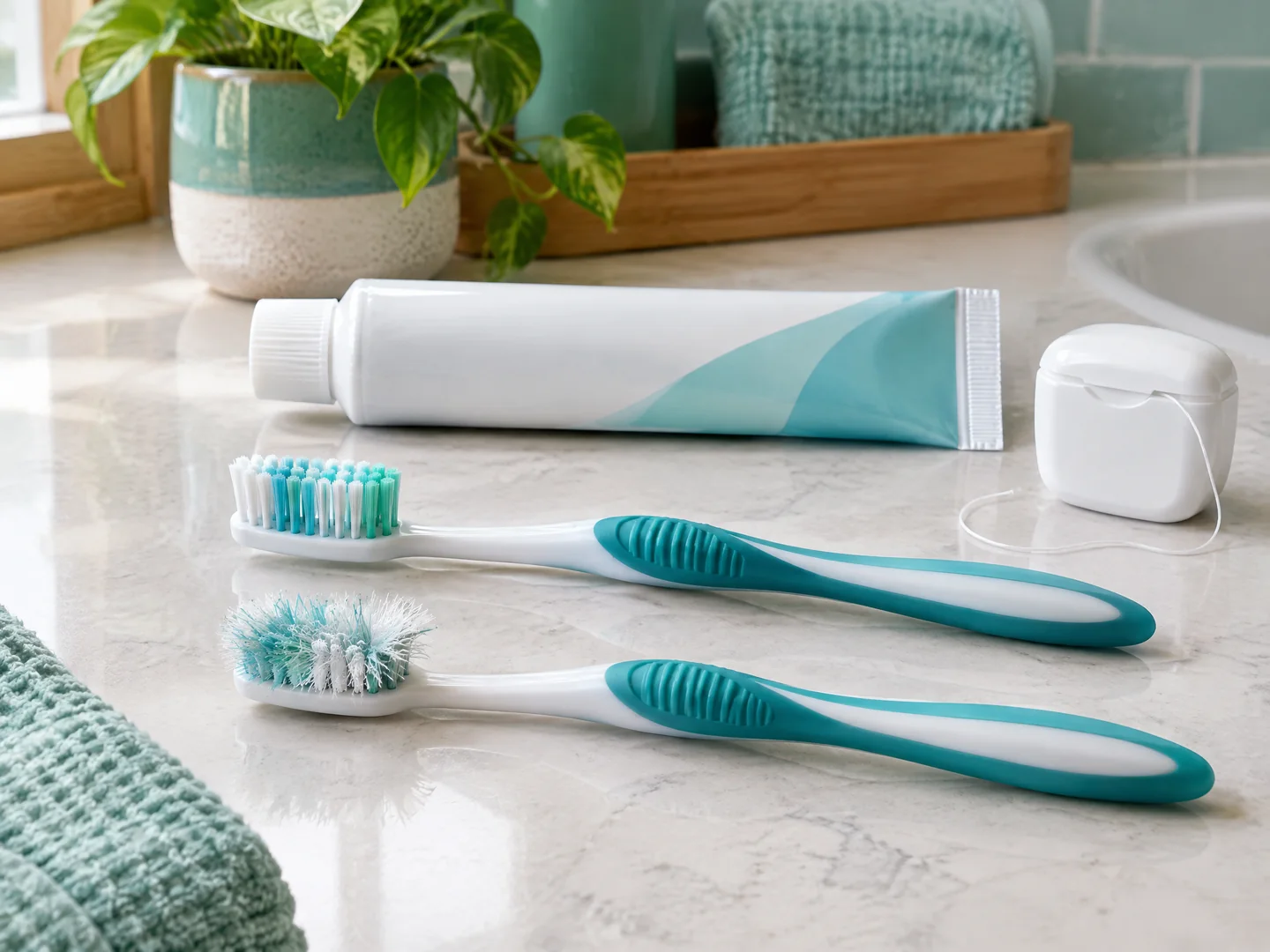
Hard bristles are not a shortcut to a deeper clean. For most people, a soft-bristled brush is the safer everyday choice. A brush also becomes less effective as its bristles bend, fray, or lose their shape.
The fix
Choose a brush head that fits comfortably and reaches the back teeth. Replace it every three to four months, or sooner if bristles are worn [1]. A powered brush may help with limited hand strength or coordination, but still requires gentle pressure and complete coverage.
Store the brush upright and let it air-dry in the open; avoid enclosing it while wet.
Mistake 4: Missing the gumline, inner surfaces, or chewing surfaces
Brushing the outside of the front teeth is easy to remember because it is the part you see in the mirror. Plaque, however, can collect on the tongue side of the teeth, at the gumline, and in grooves on chewing surfaces. The inside surfaces of the upper and lower front teeth can be particularly easy to rush past.
The fix
Use a consistent pattern: angle the bristles toward the gumline; brush the outer, inner, and chewing surfaces; and tilt the brush vertically behind the front teeth. Brush the tongue gently if comfortable. A small head may help with hard-to-reach areas. Ask your dental team for specific instructions around crowns, bridges, implants, retainers, or aligners.
Mistake 5: Skipping between-teeth cleaning
A toothbrush cannot fully reach the spaces between teeth. Plaque left there can irritate the gums and, over time, harden into tartar. Tartar cannot be brushed away; it requires removal by a dental professional [3].
The fix
Clean between your teeth once a day. Ease floss to the gumline and curve it around each tooth; do not snap it into the gums. If floss is difficult because of arthritis, braces, bridges, or limited dexterity, a holder, water flosser, or interdental brush may be easier. Ask a dentist or hygienist which tool fits your mouth.
If your gums bleed when you begin cleaning between teeth, do not diagnose yourself from that symptom. Persistent bleeding, swelling, tenderness, bad taste, or loose teeth deserves a dental evaluation.
Mistake 6: Brushing immediately after acidic foods or drinks
Acidic foods and drinks—including soda, citrus, sports drinks, and some reflux or vomiting episodes—can temporarily soften the enamel surface. Brushing immediately afterward may be uncomfortable and may increase mechanical wear in some circumstances. The best timing can depend on the exposure, frequency, saliva, enamel condition, and your health history, so a universal countdown is not right for everyone.
The fix
After an acidic exposure, rinse with water and avoid brushing immediately. Ask your dental professional how long to wait. Do not brush harder to compensate. Mention frequent reflux, vomiting, or acidic sipping at a preventive visit.
Mistake 7: Leaving fluoride toothpaste out of the routine—or using the wrong amount for a child
Fluoride helps strengthen enamel and prevent cavities. The ADA, CDC, and NIDCR recommend fluoride toothpaste for routine brushing, used as directed [1] [3] [5]. Adults generally need a standard amount that covers the brush; children need age-appropriate amounts and supervision.
The fix for adults
Brush twice daily with fluoride toothpaste. Spit after brushing rather than swallowing a large amount. If a dentist recommends a prescription-strength fluoride product, gel, rinse, or varnish because of cavity risk, follow those instructions. Do not stop a prescribed or recommended fluoride product without discussing it with the clinician who advised it.
The fix for children
Clean an infant’s gums with a soft cloth or infant brush. As soon as teeth erupt, an adult should brush twice daily with a rice-grain smear of fluoride toothpaste. From ages 3 to 6, use no more than a pea-sized amount, help or supervise brushing, and teach the child to spit rather than swallow [4] [5]. The first dental visit should happen when the first tooth appears or no later than the first birthday [4].
Avoid putting a child to sleep with anything other than water in a bedtime bottle, and avoid nursing a child to sleep as a way to prevent decay [4]. Supervision matters because young children usually cannot clean every surface effectively on their own. This is general children’s dental care information; your child’s dentist or pediatric clinician can tailor fluoride advice to the child’s age, risk, and water source.
Mistake 8: Treating brushing as the whole plan
Brushing is foundational, but diet, saliva, medicines, tobacco exposure, restorations, age, dexterity, and cavity or gum-disease history also affect risk. A toothbrush cannot examine a suspicious patch, measure gum pockets, evaluate a crack, or remove tartar.
The fix
Combine brushing with between-teeth cleaning, limited frequent sugar, and dental visits based on your oral health. Many people schedule a cleaning and exam about every six months, but gum disease, dry mouth, diabetes, cavity risk, braces, or restorations may require a different schedule [2] [3].
A preventive visit is also a chance to discuss a comfortable handle, an electric brush, fluoride options, dry mouth, denture care, or brushing around a retainer. Garden City Family Dentistry offers general and preventive dentistry for children, adults, and older adults; the appropriate plan starts with an evaluation rather than a one-size-fits-all promise.
Special considerations for older adults
Older adult dental care is not just about brushing technique. Dry mouth is not an inevitable part of aging. Medicines, dehydration, and medical conditions can reduce saliva, which may make chewing, swallowing, and speaking harder and increase the risk of root decay and fungal infections [8]. Receding gums can expose roots that are more vulnerable to decay, while gum disease can affect teeth at any age.
If your mouth feels persistently dry, ask your dentist and prescribing clinician to review possible causes; do not change a medicine on your own. Water, sugar-free gum or candy when appropriate, and clinician-recommended saliva products may help. Clean dentures daily and, if possible, remove them overnight [2] [8]. A caregiver can help with brushing, denture cleaning, transportation, and appointments.
Visit intervals should be individualized. Contact a dentist or physician if a sore, lump, thick patch, red or white patch, persistent sore throat or hoarseness, numbness, difficulty chewing or swallowing, jaw or tongue movement problems, or unexplained mouth bleeding lasts more than two weeks [8] [9]. These symptoms often have other causes, but should not be ignored.
When a brushing concern needs urgent evaluation
Call promptly for severe pain, facial swelling, fever with dental symptoms, uncontrolled bleeding, a knocked-out or badly broken tooth, a painful lost restoration, or dental injury. Garden City Family Dentistry’s emergency dental evaluation page advises calling (734) 522-6340; same-day appointments may be available during normal business hours.
Trouble breathing or swallowing, rapidly spreading swelling, or a life-threatening emergency requires 911 or emergency medical care. Do not try to diagnose an abscess or rely on brushing to resolve an infection.
A tooth knocked out during trauma needs immediate guidance. Hold a permanent tooth by the crown, not the root; if it cannot be gently placed back as directed by a dental professional, keep it in milk and seek urgent care [4]. Baby teeth and permanent teeth are managed differently, so call promptly rather than guessing.
What about braces or clear aligners?
Clear aligners are a separate orthodontic decision—not a treatment for jaw-joint pain or TMD. Selected crowding, spacing, and bite concerns may be treatable, but candidacy depends on an in-person evaluation of your teeth, bite, oral health, goals, wear expectations, and plan. Traditional braces may suit other cases [10].
For readers considering an Invisalign or clear aligner consultation in Garden City, brush and clean between your teeth before replacing removable aligners. A consultation explains options; it is not a promise of candidacy or outcome.
Frequently asked questions
What are the most common toothbrushing mistakes?
Common mistakes include brushing too briefly, using too much pressure, choosing hard or worn bristles, missing the gumline or inner surfaces, skipping between-teeth cleaning, brushing immediately after acidic exposure, using fluoride incorrectly, and assuming brushing replaces professional care.
How long and how often should I brush?
Brush twice a day with fluoride toothpaste for about two minutes each time. Use a soft brush and gentle, controlled strokes. A dental professional can adjust the routine for braces, restorations, sensitivity, dexterity limitations, or other individual needs.
Should I brush right after eating?
Avoid brushing immediately after acidic foods or drinks. Rinse with water and ask your dentist about appropriate timing for your circumstances. The best advice can depend on the type and frequency of acid exposure and your enamel or reflux history.
How much fluoride toothpaste should my child use?
As soon as teeth erupt, use a rice-grain smear. From ages 3 to 6, use no more than a pea-sized amount. An adult should perform or supervise brushing and teach the child to spit rather than swallow [4] [5]. Ask the child’s clinician about individualized fluoride needs.
Can hard brushing cause receding gums?
Too much force can irritate gum tissue and contribute to abrasion, but gum recession can have multiple causes. Do not diagnose the cause from a symptom alone. Use gentle pressure and arrange an evaluation for recession, persistent bleeding, pain, or sensitivity.
When is a dental problem urgent?
Severe pain, facial swelling, fever with oral symptoms, uncontrolled bleeding, a knocked-out or badly broken tooth, or a painful lost restoration needs prompt dental guidance. Trouble breathing or a life-threatening emergency is a 911 situation.
A local next step for a healthier routine
If you are looking for a dentist in Garden City, MI or a family dentist in Garden City, Garden City Family Dentistry is located at 7110 Venoy Road, Garden City, MI 48135. Call (734) 522-6340 to request a preventive dental visit, dental cleaning and exam, or an appropriate evaluation for a concern. The practice serves Garden City, Westland, Dearborn Heights, Livonia, Canton, and Metro Detroit.
You do not need to know which procedure you need. Share whether you want preventive care, children’s or older-adult guidance, clear-aligner information, or urgent help.
Clinical review note: This patient education draft requires final practice clinical review and approval before publication.
Reviewed sources
- ADA MouthHealthy: Brushing Your Teeth
- CDC: Oral Health Tips for Adults
- NIDCR: Oral Hygiene
- American Academy of Pediatric Dentistry: Frequently Asked Questions
- CDC: About Fluoride
- National Toxicology Program: Fluoride Exposure—Neurodevelopment and Cognition
- CDC: Community Water Fluoridation Recommendations
- NIDCR: Older Adults and Oral Health
- NIDCR: Oral Cancer
- American Association of Orthodontists: Informed Consent and Related Forms