


Adult Orthodontic Treatment: Braces vs Clear Aligners
Adults can move teeth too. The right approach starts with a diagnosis—not a product—then balances the movements needed, oral health, daily routine, appearance, cost, and long-term retention.
Medically reviewed by Dr. Reich and Dr. Laing, General Dentists · Garden City Family Dentistry · Educational information, not a diagnosis or individualized treatment plan.
Can adults get braces or clear aligners?
Yes. Age alone is not the deciding factor. The health of your teeth and gums, the movements required, and your ability to follow the plan matter more.
Braces and clear aligners can both move adult teeth. Fixed braces can handle a broad range of movements and stay in place. Clear aligners are less noticeable and removable, but they require consistent wear and are not appropriate for every case.
A provider should examine your teeth, gums, bite, existing dental work, and goals before recommending an appliance.[1]
Diagnosis
What must move, and how complex is the bite?
Oral health
Are teeth and gums stable enough to begin?
Daily routine
Can you manage wear, cleaning, food, and visits?
Retention
How will the result be protected after movement?
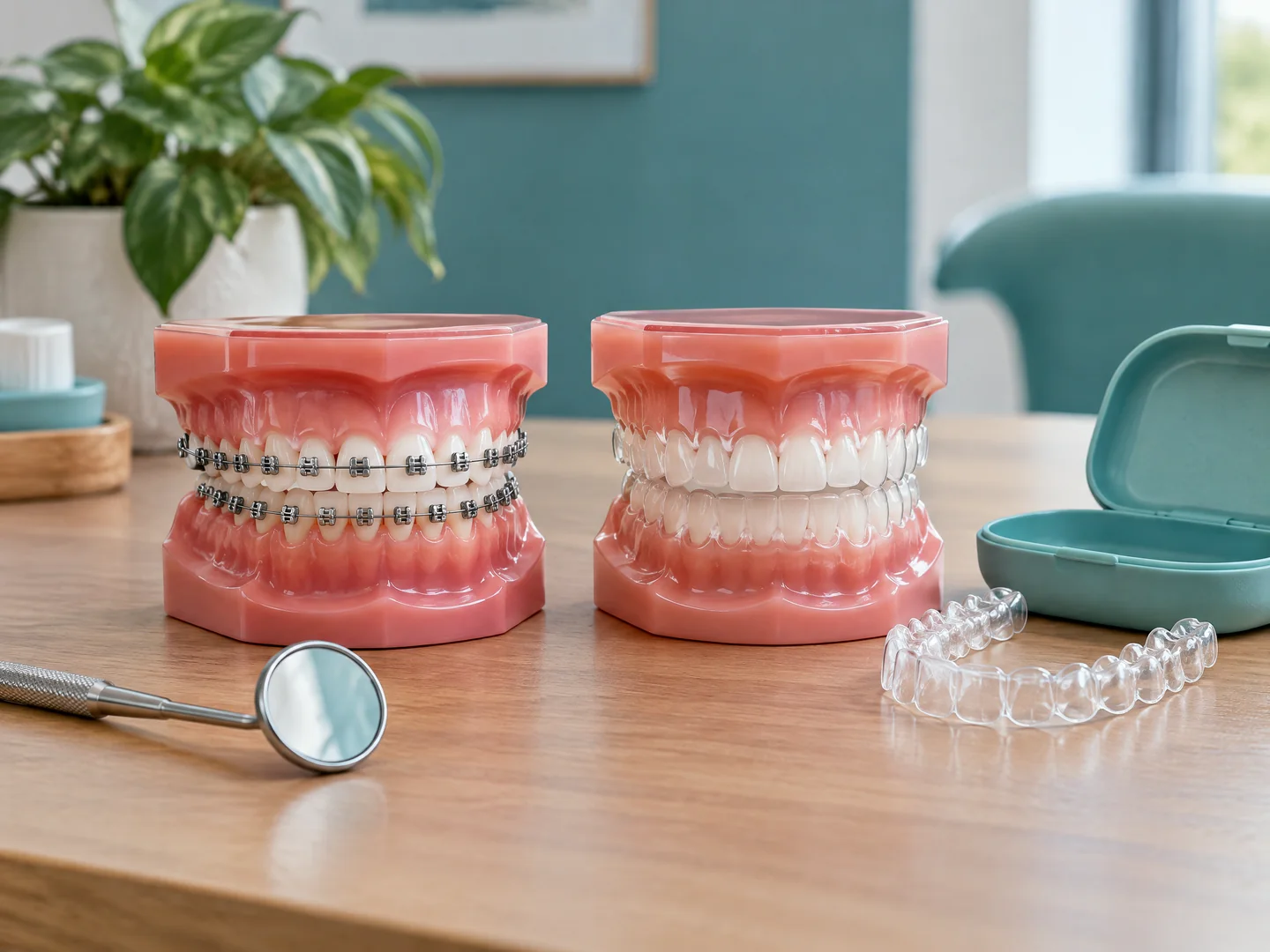
Neither option is automatically better.
The American Association of Orthodontists emphasizes that diagnosis and treatment goals should determine the appliance. Appearance is only one factor.[2]
| Decision factor | Fixed braces | Clear aligners |
|---|---|---|
| Visibility | Brackets and wires are visible; ceramic options may be less noticeable. | Transparent trays are low-profile, although tooth-colored attachments may be visible. |
| Removability | Stay attached throughout active treatment. | Removed for eating, drinking anything other than water, and oral hygiene. |
| Responsibility | Do not depend on remembering to insert trays, but appointments and appliance care remain essential. | Must be worn as prescribed and changed in the correct sequence; lost or damaged trays can interrupt progress. |
| Cleaning | Requires careful brushing and interdental cleaning around brackets and wires. | Teeth can be brushed and flossed normally, but they should be clean before trays go back in. |
| Eating | Hard, sticky, or chewy foods may damage the appliance and usually need to be avoided. | Trays come out for meals, so there are fewer appliance-related food limits. |
| Treatment range | Can address a broad range of orthodontic problems. | Can address many selected problems; suitability depends on the movements and patient. |
| Comfort | Pressure after placement or adjustment and irritation from brackets or wires can occur. | Pressure after a new tray and occasional edge irritation can occur. |
This comparison is educational. Appliance options, terminology, and provider availability vary. A consultation is needed to determine what is appropriate for your case.
Adult orthodontics is planned around function, health, and stability.
Orthodontics is the dental specialty concerned with diagnosing and correcting tooth and bite relationships. Crowding, spacing, teeth that protrude, and teeth that do not meet as intended are common reasons for evaluation. A healthier bite can make biting and chewing easier, while alignment may also make some surfaces easier to clean.[1]
Why do adults consider orthodontic treatment?
Some adults never received treatment earlier. Others notice crowding or spacing after previous orthodontic care, tooth loss, restorative work, or natural changes over time. The goal may be cosmetic, functional, restorative, or a combination.
- Teeth overlap or are difficult to clean between.
- Spaces affect appearance or a future restorative plan.
- Upper and lower teeth meet in a way that causes uneven contact or wear.
- Teeth have shifted after a retainer stopped fitting or was no longer worn.
- A dentist recommends alignment before selected crowns, bridges, implants, or other treatment.
Important limit: Alignment does not guarantee freedom from cavities, gum disease, wear, or jaw symptoms. Home care, preventive visits, diet, habits, and individual biology still matter.
Are your teeth and gums ready to move?
Adult orthodontic planning starts with oral health. Active decay, inflamed gums, periodontal bone loss, failing restorations, or unresolved pain may need attention before tooth movement begins. Existing crowns, implants, missing teeth, and planned restorative care can also affect the sequence.
A current dental examination and professional cleaning can identify issues that are not obvious at home. Patients with signs of active gum disease may need periodontal evaluation and treatment such as scaling and root planing before or alongside an orthodontic plan.
- Healthy enough gums and bone support for the planned movement
- Untreated cavities and broken restorations addressed
- A cleaning method that works around the selected appliance
- A coordinated plan for missing teeth and existing dental work
- Realistic expectations about appearance, comfort, and responsibility
How long does adult orthodontic treatment take?
There is no responsible universal estimate. Treatment time changes with the starting alignment, bite correction needed, number and type of movements, chosen appliance, biological response, missed appointments, broken appliances, and whether aligners are worn as prescribed.
An early estimate is a planning range, not a promise. The plan may change as teeth respond. Ask how progress will be measured, what could extend treatment, and whether refinements or additional aligner sets are included.
What determines adult orthodontic cost?
Cost commonly reflects case complexity, appliance, diagnostic records, anticipated treatment length, progress visits, refinements, retainers, and the provider’s fee structure. Insurance may have an age limit, lifetime orthodontic maximum, waiting period, or no adult orthodontic benefit.
Request a written estimate that separates active treatment, retainers, replacement appliances, and possible additional services. Garden City Family Dentistry provides information about insurance and financing, but current benefits, promotional terms, and eligibility should be confirmed before treatment.
Why is a retainer part of the treatment—not an extra?
Teeth naturally tend to change position after active orthodontic treatment. Retainers help limit that movement while tissues adapt and as the mouth continues to change over time. They may be removable clear or acrylic-and-wire devices, or fixed wires bonded behind teeth.[4]
Follow the wear and cleaning instructions for your device. Store a removable retainer in its case, avoid hot water that may distort it, and contact the provider if it cracks, feels painful, or no longer seats fully. Do not force a retainer over teeth that have moved.
Does orthodontic treatment prevent or cure TMJ pain?
Orthodontic treatment should not be presented as a general cure or preventive measure for temporomandibular disorders (TMDs). The National Institute of Dental and Craniofacial Research states that evidence does not support the belief that a bad bite or orthodontic treatment causes TMDs. It also recommends conservative approaches before treatments that permanently change the teeth or bite.[5]
Jaw pain, locking, painful clicking, headaches, and facial pain have several possible causes. They deserve an appropriate evaluation separate from a cosmetic alignment decision. If clenching or grinding may be involved, review the practice’s information about clenching and grinding care.
What happens during an adult orthodontic consultation?
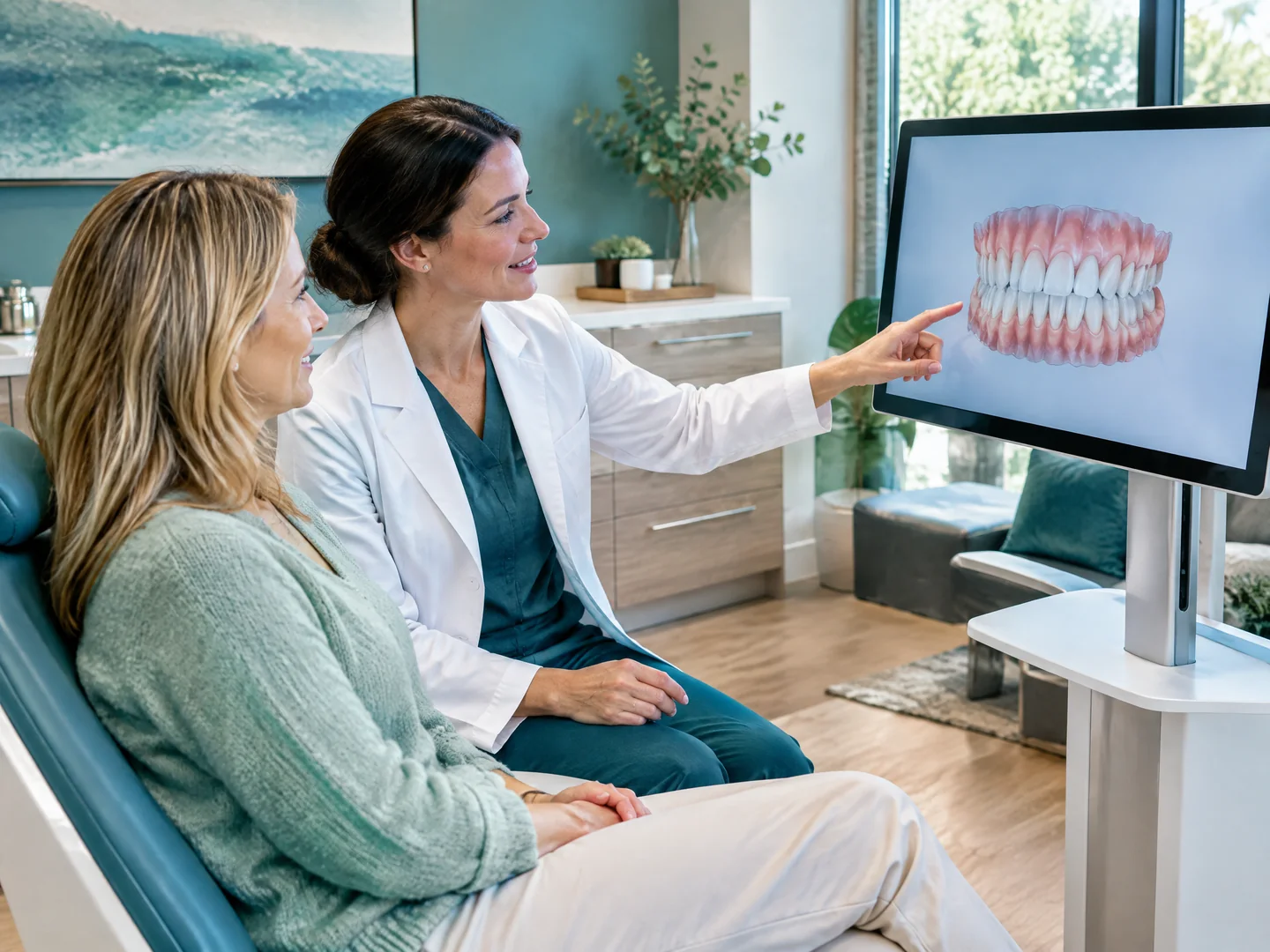
A useful consultation should explain the diagnosis, alternatives, responsibilities, likely sequence, and limits before you commit.
-
1
Goals and history
Discuss appearance, function, previous treatment, dental work, health conditions, and concerns.
-
2
Clinical evaluation
Review teeth, gums, bite, jaw function, and the condition of existing restorations.
-
3
Records
Photos, scans, models, and radiographs may be used when clinically appropriate.
-
4
Options
Compare suitable appliances, limitations, wear expectations, estimated timing, and cost.
-
5
Retention
Understand the retainer plan and long-term responsibilities before active treatment starts.
Seven questions to ask before choosing an appliance
Clear answers make it easier to compare treatment plans rather than marketing labels.
What exactly is the diagnosis?
Ask which teeth and bite relationships need correction and what happens if no treatment is chosen.
Which options are clinically suitable?
Ask why each proposed appliance can or cannot deliver the required movements.
What will I need to do every day?
Clarify tray wear, elastics, cleaning, food limits, appointments, and what to do if something is lost or broken.
What does the estimate include?
Confirm records, refinements, emergency visits, retainers, replacements, and financing terms.
What could change the timeline?
Ask about adherence, biological response, missed visits, appliance damage, and plan revisions.
Who manages the treatment?
Understand the provider’s role, monitoring schedule, and when referral to an orthodontic specialist may be appropriate.
How will the result be retained?
Review retainer type, wear schedule, cleaning, follow-up, and replacement responsibilities.
Adult orthodontic treatment answers
Am I too old for orthodontic treatment?
Age alone does not rule out orthodontic treatment. Adults need an evaluation of their teeth, gums, bone support, bite, restorations, and goals before a provider can recommend an appropriate option.
Are braces or clear aligners better for adults?
Neither option is universally better. Fixed braces can address a broad range of tooth movements without relying on tray wear. Clear aligners are removable and discreet, but candidacy and success depend on the case and consistent wear.
How long does adult orthodontic treatment take?
Treatment length varies with the starting problem, treatment goals, appliance, biological response, appointment attendance, and adherence. A clinical evaluation and diagnostic records are needed for a useful estimate.
Can clear aligners treat every orthodontic problem?
No. Clear aligners can address many selected alignment and bite concerns, but they are not the best tool for every movement or every patient. Diagnosis should determine the appliance rather than appearance alone.
Will I need a retainer after adult orthodontic treatment?
Yes. Retainers help limit the natural tendency of teeth to move after active treatment. The retainer type and wear schedule should follow your provider’s instructions.
Does orthodontic treatment fix TMJ pain?
Orthodontic treatment should not be presented as a general cure or preventive treatment for temporomandibular disorders. Jaw pain has several possible causes and needs an appropriate evaluation before treatment is selected.
Evidence behind this guide
- MouthHealthy from the ADA: Orthodontics. Treatment goals, appliances, adult care, and retention.
- American Association of Orthodontists: Braces vs. Clear Aligners. Appliance comparison, candidacy, hygiene, wear, and comfort.
- American Association of Orthodontists: Adult Orthodontics. Adult treatment reasons, options, and individualized timing.
- American Association of Orthodontists: Retainers. Retainer purpose, types, wear, and care.
- National Institute of Dental and Craniofacial Research: TMD. Causes, diagnosis, conservative care, and limits of bite-changing treatment.
Editorial note: This article updates the November 2023 post with current sources, a balanced treatment comparison, more precise benefit claims, current Garden City links, and a corrected explanation of orthodontics and TMD. It is educational and does not replace an examination or specialist evaluation.
Ready to discuss clear aligners in Garden City?
Garden City Family Dentistry offers Invisalign® planning for selected adult and teen alignment and bite concerns. A consultation can determine whether clear aligners fit your oral health, treatment goals, and daily routine—or whether another approach or specialist referral should be considered.
7110 Venoy Road, Garden City, MI 48135 · (734) 522-6340 · Serving Garden City, Westland, Dearborn Heights, Livonia, Canton, and Metro Detroit.