


Updated: [insert practice-approved publication date]
Final practice clinical review required before
publication.
If you are a parent searching for answers about fluoride and children’s IQ, the short answer is this: current evidence does not establish that community water fluoridation at the U.S.-recommended level of 0.7 milligrams per liter (mg/L) causes lower IQ. At the same time, government and peer-reviewed reviews have reported an association between higher overall fluoride exposure and lower IQ scores in some groups of children. Those findings deserve careful study, but an association is not the same as proven causation, and the studies do not automatically describe every child drinking fluoridated tap water in the United States. [1] [5] [7] [9]
Fluoride also has a well-established dental role. It helps teeth resist acid attacks, supports remineralization, and reduces cavities. The practical goal is not to avoid every source of fluoride or to take more than recommended. It is to understand your child’s total exposure, use age-appropriate dental habits, and ask a dentist, pediatrician, physician, or local water authority about questions specific to your family.
Why fluoride is used in children’s oral health
Cavities are caused by an interaction among mouth bacteria, dietary sugars and starches, and time. Bacteria use carbohydrates to produce acids that weaken enamel. Fluoride can make enamel more resistant to acid and help repair early mineral loss. Because it works through frequent, low-level contact with teeth, fluoride toothpaste and optimally fluoridated water are important parts of cavity prevention. [2] [3] [4]
The U.S. Public Health Service recommends 0.7 mg/L in community water systems that add fluoride. That recommendation was designed to balance cavity-prevention benefits with the risk of dental fluorosis, a change in developing enamel that is usually mild and cosmetic. The recommendation considers that children and adults may receive fluoride from several sources, not water alone. [2] [3]
The CDC reports that community water fluoridation reduces tooth decay by about 25% in children and adults. It also notes that the most common documented risk of excess fluoride ingestion during the years when permanent teeth are forming is dental fluorosis—not a proven decline in intelligence. [1]
What the recent fluoride-and-IQ reviews found
The National Toxicology Program review
The 2024 National Toxicology Program (NTP) monograph reviewed human, animal, and mechanistic research on fluoride exposure and neurodevelopment or cognition. It concluded, with moderate confidence, that higher estimated fluoride exposures—such as exposure approximating drinking water above the World Health Organization guideline of 1.5 mg/L—are associated with lower IQ in children. [7] [8]
That conclusion needs context. The NTP review evaluated total estimated exposure, which can include drinking water, food, beverages, and dental products. It was not designed to determine the effects of U.S. community water fluoridation alone, and it did not evaluate fluoride’s cavity-prevention benefits. The NTP states that there were insufficient data to determine whether exposure to water at 0.7 mg/L affects children’s IQ. It also says that an association does not prove cause and effect and that more research is needed at lower exposure levels. [7]
Many of the studies supporting the higher-exposure conclusion came from countries and regions where some participants experienced naturally high fluoride levels. Differences in nutrition, socioeconomic conditions, other environmental exposures, health care, schooling, and methods of measuring fluoride or IQ can influence observational results. These limitations do not make the findings irrelevant; they do mean that the results should not be converted into a simple claim that recommended U.S. fluoridation causes a specific number of lost IQ points.
The 2025 systematic review and meta-analysis
A 2025 systematic review in JAMA Pediatrics analyzed 74 cross-sectional and prospective cohort studies. Sixty-four studies reported inverse associations between fluoride exposure measures and children’s IQ. However, 52 studies were rated high risk of bias, most studies were conducted outside the United States, and the exposure and outcome measurements varied substantially. [9]
In the review’s drinking-water analysis, the association was not present when exposed groups were restricted to below 1.5 mg/L in the overall analysis. Associations were still seen in some analyses using urinary fluoride, which reflects exposure from multiple sources and can vary over time. The authors appropriately described the work as evidence that may inform future risk-benefit assessments—not as proof that community water fluoridation causes IQ loss. [9]
How public-health and dental groups interpret the evidence
The AAP continues to recommend age-appropriate fluoride toothpaste and optimally fluoridated water for cavity prevention. Its parent guidance says recommended-level fluoridated water has not been linked to lower IQ and distinguishes it from reports involving very high fluoride levels. [5] The AAP has also pointed to limitations in the NTP review, including geographic differences, potential confounding, and whether IQ tests from different studies can be compared reliably. [10]
The ADA, CDC, AAPD, and U.S. Public Health Service continue to support community water fluoridation at 0.7 mg/L as an effective cavity-prevention measure. The NTP review does not overturn the need for individualized care; it clarifies an evidence gap that researchers and public-health agencies should continue to examine. [1] [2] [4] [6] [7]
What this means for a parent in practical terms
Use fluoride toothpaste in the right amount
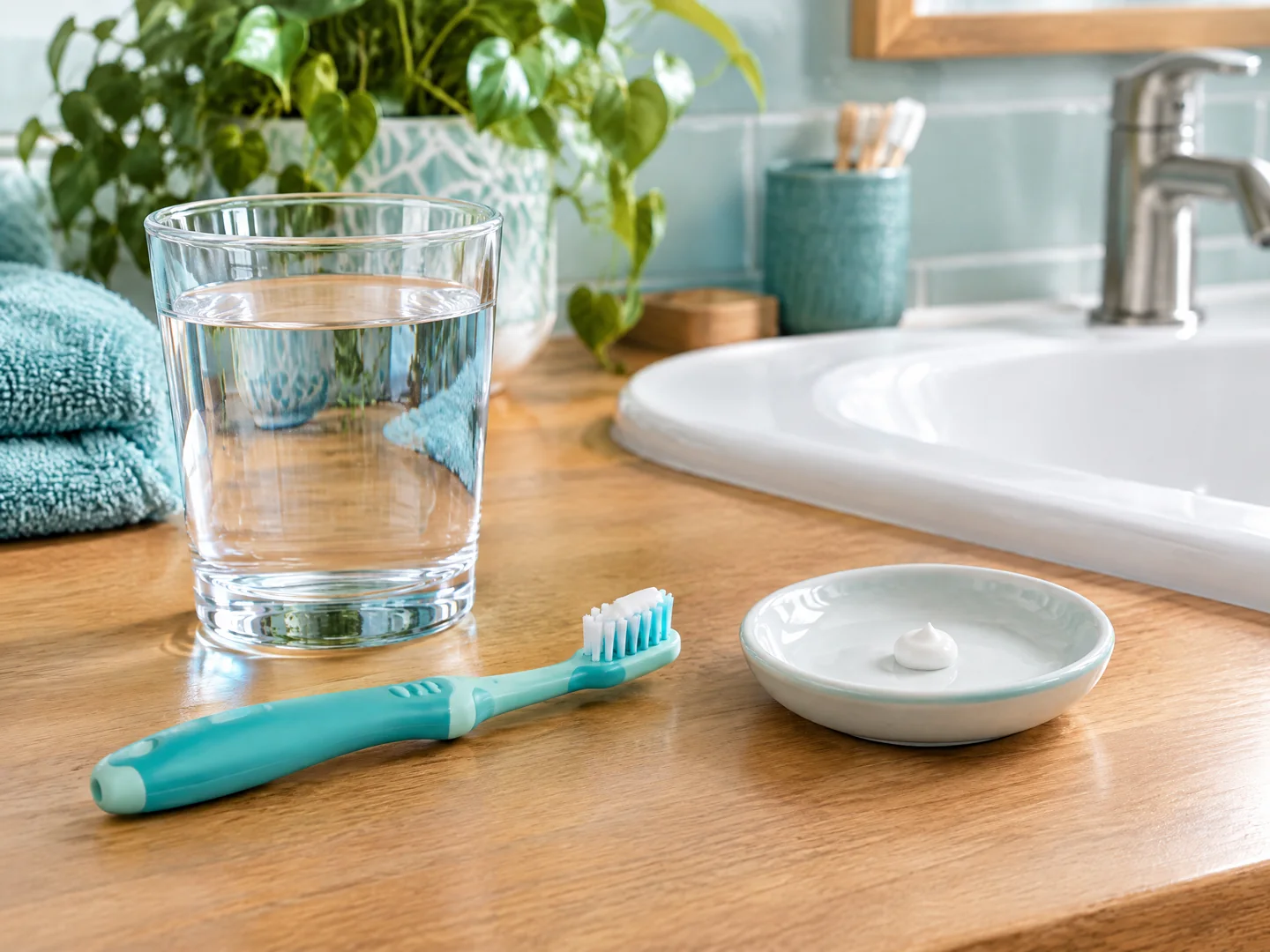
When the first tooth appears, brush twice a day with a smear or grain-of-rice–sized amount of fluoride toothpaste until age 3. From age 3 onward, a pea-sized amount is generally appropriate. An adult should apply or supervise brushing, help the child spit when able, and avoid letting a young child swallow toothpaste. Children do not need to rinse with water after brushing. [5] [6]
Use a soft-bristled toothbrush, gentle pressure, and about two minutes of brushing twice daily. Clean between teeth when spaces close or your dental team recommends it. Replace a toothbrush when bristles are worn, splayed, or damaged. These details matter because cavity prevention is not just about what is in the water; it also depends on brushing technique, diet, saliva, and regular dental care.
Know your water source without guessing
If your home uses a public water system, ask the utility about its fluoride level or use the CDC’s water-system lookup tool. If your family uses well water, bottled water, a filtration system, or water from more than one source, ask how fluoride content can be checked. Water filters differ in what they remove, and bottled water is not automatically fluoride-free or fluoridated.
Do not start fluoride drops or tablets based only on a label, a social-media post, or a general article. Supplements may be considered for some children when community water is suboptimal, but the decision should account for all dietary sources and the child’s cavity risk. [5] [6]
Think about bottles, formula, and feeding habits
Breastfed infants and formula-fed infants younger than 6 months generally do not need fluoride supplements. Fluoridated water can be used to prepare infant formula, but families who have questions about fluorosis risk or their water source should discuss them with the child’s pediatrician or dentist. Ready-to-feed formula is another option that does not require added water. [5]
More important for early tooth health is limiting frequent exposure to sugary drinks and avoiding putting a baby to bed with a bottle containing milk, formula, juice, or another sweetened drink. Do not dip a pacifier in sugar or honey. As complementary foods and drinks change, water and a balanced eating pattern can help protect teeth.
Start dental care early
Plan a child’s first dental visit by age one or within six months of the first tooth appearing, whichever comes first. Early visits are a chance to discuss brushing, feeding, fluoride exposure, enamel development, and cavity risk—not a sign that something is wrong. A preventive dental visit can also help a family decide whether a professional fluoride varnish or another preventive measure is appropriate. The USPSTF recommends fluoride varnish for children younger than 5 after teeth erupt; individual recommendations still depend on the child’s examination and risk. [6] [12]
What fluoride and IQ studies do not show
These studies do not show that a child’s IQ can be predicted from whether the family drinks tap water. They do not establish that a particular toothpaste, varnish application, or community water system caused a child’s learning difference. They do not prove that stopping recommended fluoride improves development. IQ is influenced by many genetic, educational, social, nutritional, medical, and environmental factors, and observational studies cannot control every factor perfectly.
They also do not justify abruptly stopping prescribed fluoride supplements, avoiding fluoride toothpaste, or changing a child’s water or feeding plan without professional advice. If you are worried, bring the actual product labels, water information, supplement dose, and your child’s age and dental history to a pediatrician or dentist. For questions about the quality or composition of local water, contact the water provider or local health authority.
When a child needs urgent dental evaluation
Fluoride questions are usually appropriate for a routine preventive appointment. Seek prompt dental guidance after a mouth injury, a knocked-out permanent tooth, a broken tooth, significant bleeding, severe or worsening tooth pain, facial swelling, or a suspected dental abscess. Do not diagnose the cause from symptoms alone. If swelling affects breathing or swallowing, or there is a life-threatening emergency, call 911. Garden City Family Dentistry’s emergency dentistry guidance explains when to call the office for direction.
For a knocked-out permanent tooth, handle it by the crown rather than the root, keep it moist, and seek immediate dental care. A baby tooth should not be pushed back into the socket. A dentist can advise what to do based on the injury, the child’s age, and which tooth was affected.

A calm next step for Garden City families
If you are looking for a dentist in Garden City, MI, bring your fluoride questions to a preventive dental visit rather than trying to solve them alone. Garden City Family Dentistry provides family dental care at 7110 Venoy Road, Garden City, MI 48135, and can be reached at (734) 522-6340. The practice serves families in Garden City, Westland, Dearborn Heights, Livonia, Canton, and Metro Detroit.
A dental cleaning and exam can include a review of brushing, diet, water source, enamel, gums, and cavity risk. You can also explore the practice’s preventive dentistry in Garden City page before calling. If your family later has a separate question about alignment, a clear aligner consultation in Garden City is a distinct evaluation: aligners may be appropriate for selected alignment concerns, but orthodontic treatment is not a treatment for TMD and candidacy requires an examination.
Frequently asked questions
Does fluoride at the recommended level lower children’s IQ?
Current evidence does not establish that community water fluoridation at the U.S.-recommended 0.7 mg/L causes lower IQ. Reviews have found associations at higher or less clearly comparable exposure levels, and NTP says there are insufficient data to determine whether 0.7 mg/L affects IQ. [2] [5] [7]
What did the National Toxicology Program actually conclude?
NTP concluded with moderate confidence that higher estimated fluoride exposure is associated with lower IQ in children. It did not assess the oral-health benefits of fluoride, was not designed to evaluate community fluoridation alone, and did not prove causation. [7] [8]
Should I stop fluoride toothpaste or a fluoride supplement?
Do not stop a prescribed or recommended fluoride product without discussing it with the child’s dentist or pediatrician. Ask about the child’s total exposure, cavity risk, water source, and the appropriate amount for the child’s age.
How do I find out whether our water contains fluoride?
Contact your public water provider or use the CDC’s water-system information. For well water, ask how to obtain testing. Tell the dentist or pediatrician about filtered, bottled, or mixed water sources before discussing supplements. [5]
Reviewed sources
- CDC Scientific Statement on Community Water Fluoridation
- CDC Community Water Fluoridation Recommendations
- U.S. Public Health Service Recommendation for Fluoride Concentration in Drinking Water
- ADA MouthHealthy: Fluoride in Water
- American Academy of Pediatrics: Fluoride for Children Parent FAQs
- AAPD Policy on Use of Fluoride
- National Toxicology Program: Fluoride Exposure—Neurodevelopment and Cognition
- NTP Monograph in PubMed Central
- Taylor et al., Fluoride Exposure and Children’s IQ Scores: A Systematic Review and Meta-analysis
- American Academy of Pediatrics: Fluoride for Children Parent FAQs
- NIDCR: Children’s Oral Health
- USPSTF: Prevention of Dental Caries in Children Younger Than 5 Years