

5 Common Dental Myths Debunked: What the Evidence Says
Does brushing harder clean better? Can a cavity exist without pain? Is whitening unsafe? Get direct, evidence-based answers before a familiar misconception shapes your next decision.
Medically reviewed by Dr. Reich and Dr. Laing, General Dentists · Garden City Family Dentistry · Educational information, not a diagnosis or a substitute for individualized dental care.
What are the most common dental myths?
Five persistent myths concern brushing pressure, cavity causes, symptom-free problems, whitening safety, and pain during treatment.
The evidence supports a more balanced view: gentle brushing works, both sugars and starches can fuel cavity-causing acid, early disease may be painless, whitening has benefits and limits, and modern pain-control options can make care more comfortable.
Oral health advice is not one-size-fits-all. Your risk factors, symptoms, restorations, medical history, and goals still matter.
Harder brushing?
No. Use soft bristles and gentle pressure.
Only sugar?
No. Sugars and starches can fuel acid attacks.
No pain?
No pain does not prove that teeth and gums are healthy.
Whitening unsafe?
Not inherently, but suitability and instructions matter.
All care hurts?
No. Comfort options depend on the person and procedure.
Good dental decisions start with the full story.
Many dental myths sound plausible because they contain one small piece of truth. Sugar can contribute to cavities. Whitening can cause sensitivity. Some procedures can feel uncomfortable. The problem appears when a partial truth becomes an absolute rule. The sections below separate each claim from what current guidance actually supports.
“Brushing harder removes more plaque.”
FactBetter technique matters more than more pressure.
The American Dental Association (ADA) recommends a soft-bristled toothbrush and gentle pressure. Place the bristles near the gumline and use controlled strokes to reach the outer, inner, and chewing surfaces. Brushing for two minutes twice daily gives you time to clean each area without turning the brush into a scrubbing tool.[1]
More pressure can bend the bristles away from the tooth surface and may increase the risk of gum abrasion. If your bristles fray quickly or brushing causes tenderness, ask your dental team to review your technique.
What to do: Choose soft bristles, use a light grip, and focus on complete coverage. Review our guide to cleaning and replacing your toothbrush for the rest of the routine.

“Sugar is the only cause of cavities.”
FactCavity risk depends on bacteria, fermentable carbohydrates, acid exposure, and protection.
Decay-causing bacteria use sugars and starches from foods and drinks to produce acids. Repeated acid attacks remove minerals from enamel. Saliva and fluoride help replace some of those minerals, but frequent snacking or sipping can shift the balance toward continued mineral loss.[2]
This means candy is not the only concern. Crackers, bread, sweetened drinks, and other sources of fermentable carbohydrates can contribute. Frequency matters as well as quantity. Dry mouth, exposed roots, braces, limited dexterity, and other individual factors can change risk. Acidic beverages can also erode enamel directly, although erosion and bacteria-driven tooth decay are different processes.
What to do: Brush with fluoride toothpaste, clean between teeth, limit frequent sugary or starchy snacks and drinks, and use a personalized preventive dentistry plan.
“I only need a dentist when something hurts.”
FactEarly tooth decay and gum problems may not cause pain.
The National Institute of Dental and Craniofacial Research states that early tooth decay usually has no symptoms. A dentist may find white, brown, or black changes, softened areas, or decay visible on an X-ray during a regular checkup. Pain, sensitivity, swelling, and fever can appear after disease has advanced.[3]
Preventive visits are not simply a search for cavities. Your dental team can examine the gums and oral tissues, review bite and wear, remove tartar that brushing cannot remove, and adjust your home-care routine. The right recall interval varies with cavity risk, gum health, age, medical factors, and treatment history; “every six months” is common, not a universal rule.
What to do: Keep the schedule recommended for you and do not wait for pain. Learn what happens during a professional dental cleaning and exam.
“Whitening products are unsafe for teeth.”
FactWhitening can be appropriate, but it is not risk-free or right for every concern.
Whitening includes professionally applied treatment, dentist-supplied home systems, and over-the-counter products. The ADA notes that temporary tooth sensitivity and gum inflammation are the most common adverse effects. A clinical exam can help identify why teeth look darker and whether bleaching is suitable.[4]
Whitening changes natural tooth structure but does not change the shade of crowns, veneers, implants, or composite bonding. It also does not fix cavities, gum disease, cracks, or every type of internal discoloration. Overuse or incorrect application can increase irritation without improving the result.
What to do: Follow product directions, stop and seek advice if irritation is significant, and discuss restorations or persistent discoloration before treatment. Compare the practice’s dentist-supervised ZOOM® teeth-whitening option.
“All dental procedures are painful.”
FactComfort can often be planned, but no honest provider should promise zero sensation.
Local anesthesia blocks nerves that sense or transmit pain in a specific area. Depending on the procedure and the patient, other medication or sedation options may help with anxiety or more complex treatment. The appropriate choice depends on the procedure, overall health, allergies, medications, and anxiety level.[5]
Pressure, vibration, sound, and temporary tenderness are different from sharp pain. Tell the dental team what you are feeling, what has made past visits difficult, and whether you need a pause. Ask what comfort options are available rather than assuming every procedure or every practice uses the same approach.
What to do: Share your concerns before treatment, review risks and benefits, agree on a stop signal, and ask what you may feel during and after the procedure.
Use three questions before trusting an oral-health claim.
A confident post or video is not the same as reliable guidance. These checks can help you decide what deserves a closer look.
Who is making the claim?
Look for a named clinical organization, government health source, or qualified professional whose expertise matches the topic.
Does the advice use absolutes?
Words such as always, never, guaranteed, painless, and safe for everyone often hide important limits and individual differences.
What would change the answer?
Your symptoms, medications, gum health, restorations, age, and cavity risk can turn general information into a different personal recommendation.
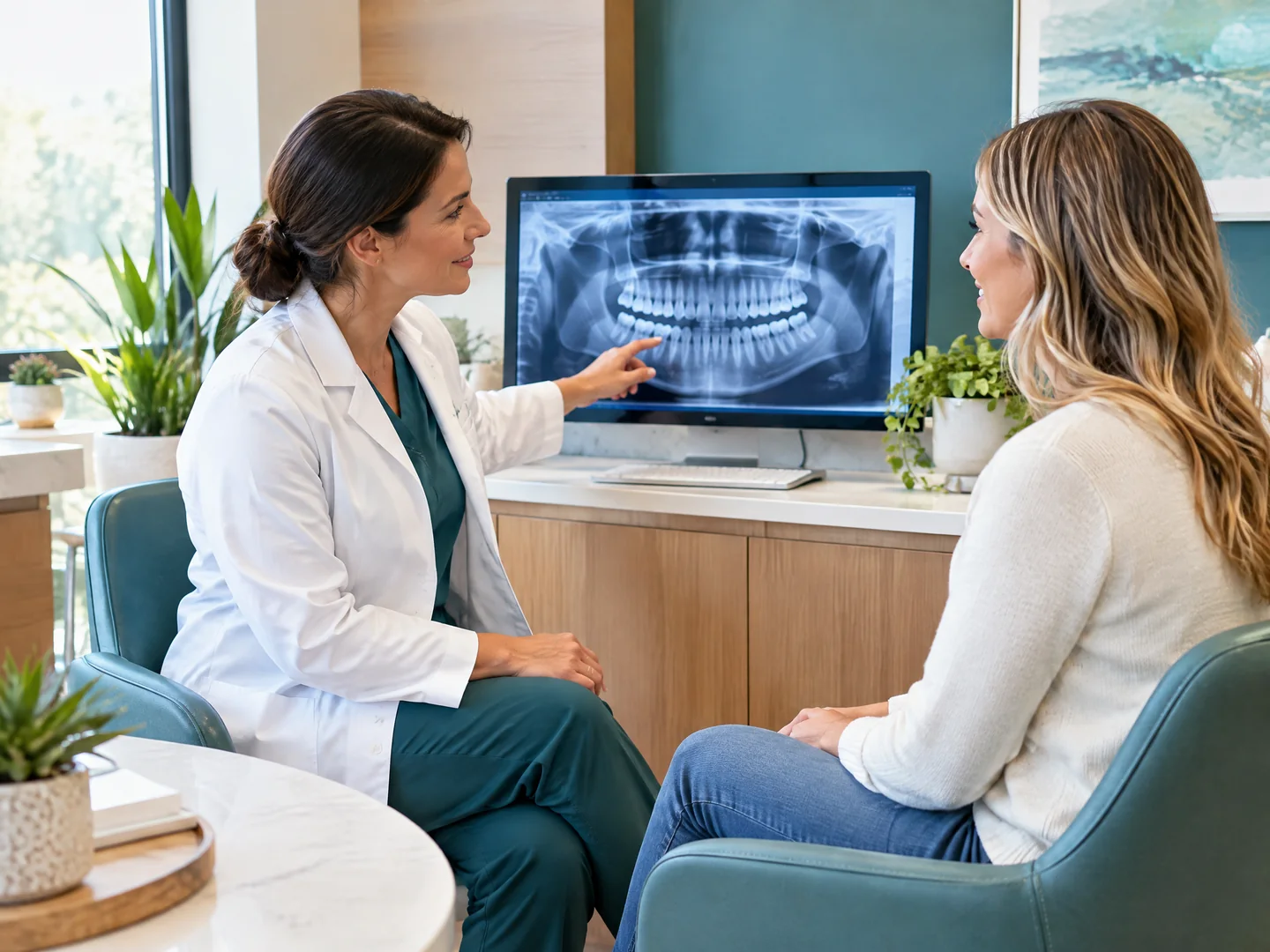
Ask sooner when a symptom or decision is unclear.
Online dental information is most useful when it helps you ask better questions. It cannot show what is happening under a filling, between teeth, below the gumline, or inside a tooth.
- Call promptly for facial swelling, fever, dental trauma, or severe or worsening pain.
- Schedule an evaluation for persistent sensitivity, bleeding gums, bad breath, or a changing spot.
- Ask before whitening if you have restorations, gum irritation, active decay, or unexplained discoloration.
- Discuss anxiety and previous difficult experiences before treatment begins.
Quick answers about common dental myths
Is it bad to brush your teeth too hard?
Brushing harder is not better. The ADA recommends a soft-bristled toothbrush and gentle pressure, which can clean effectively while helping reduce the risk of gum injury.
Can you have a cavity without tooth pain?
Yes. Early tooth decay usually has no symptoms. A dentist may detect early decay during an exam or with dental X-rays before it causes pain or sensitivity.
Is sugar the only cause of cavities?
No. Decay-causing bacteria use sugars and starches from foods and drinks to make acids. Risk also depends on how often teeth face acid attacks, oral hygiene, fluoride exposure, saliva, and individual factors.
Is teeth whitening safe?
Whitening can be appropriate when the product or professional treatment fits the patient and is used as directed. Temporary tooth sensitivity and gum irritation are common possible effects, and restorations do not whiten like natural teeth.
Are all dental procedures painful?
No. Local anesthesia can block pain in a specific area, and other comfort or anxiety-management options may be available depending on the procedure, the patient’s health, and the practice. No treatment should be promised as completely sensation-free.
How often should you visit the dentist?
Visit at the interval recommended for your oral health. Many people attend routine preventive visits on a regular schedule, but the right timing can vary with cavity risk, gum health, age, medical factors, and treatment history.
Evidence behind these answers
- American Dental Association: Toothbrushes. Soft bristles, gentle pressure, brushing time, and technique.
- National Institute of Dental and Craniofacial Research: The Tooth Decay Process. Sugars, starches, acid attacks, fluoride, saliva, and early mineral loss.
- National Institute of Dental and Craniofacial Research: Tooth Decay. Symptoms, diagnosis, prevention, and treatment.
- American Dental Association: Whitening. Whitening methods, sensitivity, gum irritation, stain types, restorations, and patient considerations.
- MouthHealthy from the ADA: Anesthesia and Sedation. Pain control, anxiety support, patient factors, and treatment-specific decisions.
Editorial note: This article updates the October 2024 post with current sources, more precise claims, working production-domain links, and clear limits. It is educational and does not replace an examination, diagnosis, or treatment plan.
Have a dental question that deserves a personal answer?
Our team can evaluate your teeth and gums, explain what the findings mean, and help you compare appropriate next steps without relying on one-size-fits-all advice.
7110 Venoy Road, Garden City, MI 48135 · Serving Garden City, Westland, Dearborn Heights, Livonia, Canton, and Metro Detroit.